

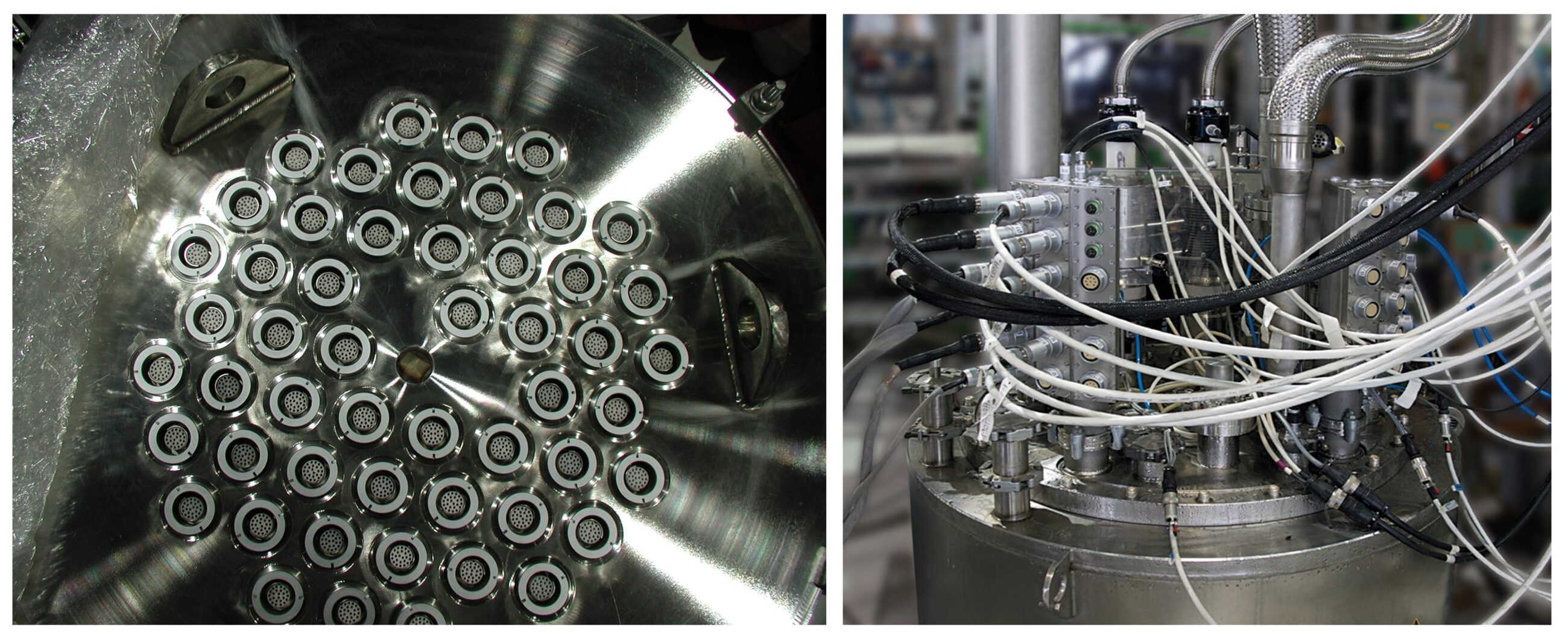
“Tens of thousands of hermetic, gas-tight Fischer connectors have been performing flawlessly for decades across our cryostats, vacuum chambers, and monitoring and safety instruments. That’s proven, lasting value.” – Reported by Georgia Karampakalis, Area Sales Specialist, Switzerland
Customer voice: hermeticity as the foundational technology for high-performance, durable connectivity – the nuclear use case
July 30, 2026 · 3 min readSome feedback speaks for itself. This comes from a world-renowned organization for nuclear research, which has relied on hermetic connectors from the Fischer Core Series for decades – a track record that says as much about the technology behind them as it does about the customer relationship itself.
A technology invented to solve an impossible sealing problem
To understand why that feedback carries so much weight, it helps to go back to where hermeticity began at Fischer Connectors.
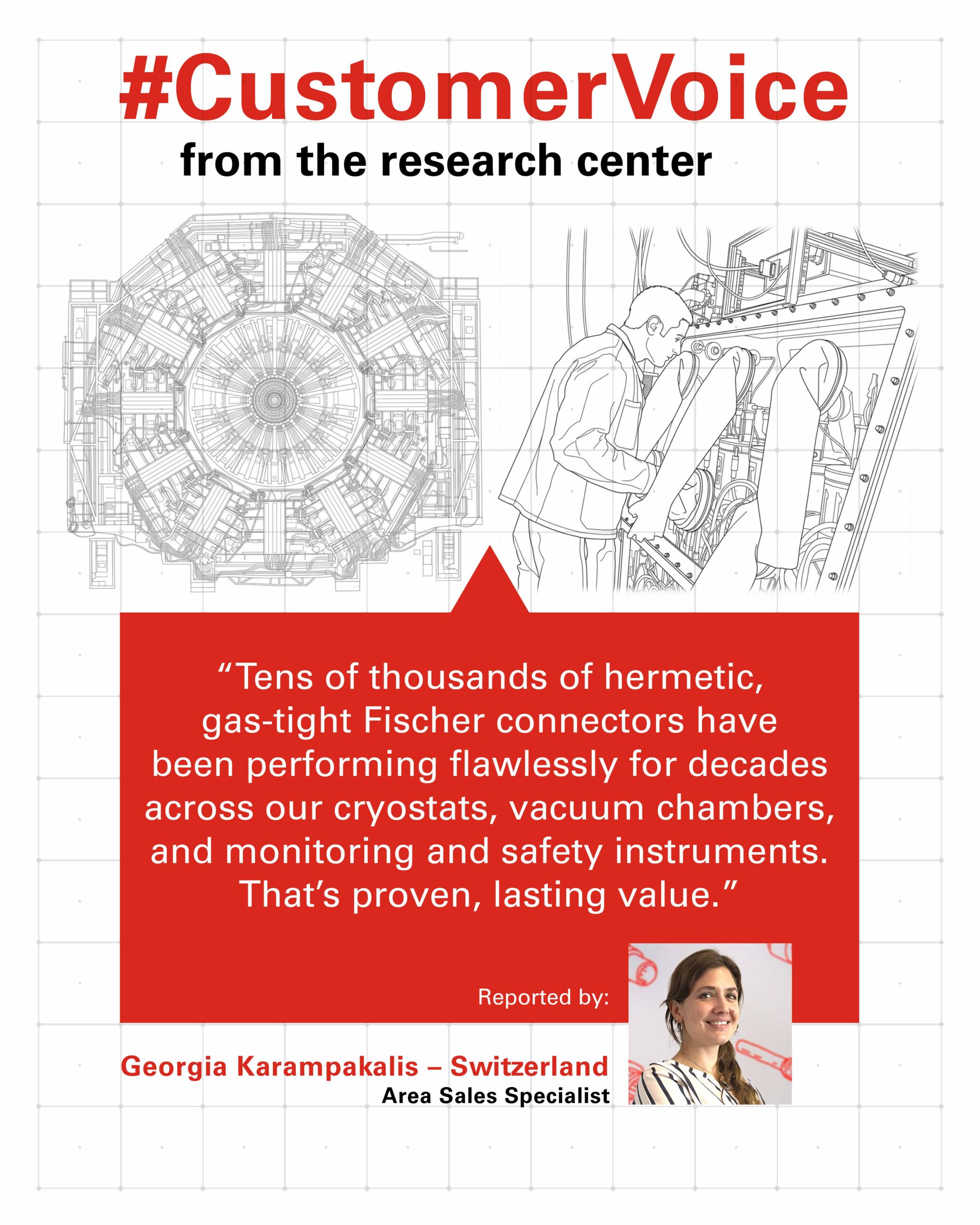
Hermetic connector technology was invented in the 1960s by Walter Werner Fischer, the founder of the Swiss company, who created the world’s first hermetic connector. His invention laid the foundation for decades of high-performance, durable connectivity solutions, built to meet one of the toughest design challenges: sealing tight enough to block gases down to the molecular level.
That challenge is what makes hermetic connectors indispensable in such applications as vacuum chambers or pressurized vessels: even the smallest gas leak, invisible to the naked eye, can compromise a measurement, a reaction, or a safety system.
Decades later, hermeticity remains one of Fischer Connectors’ flagship technologies, the reason design engineers worldwide associate the brand with high-reliability connectivity in the most demanding environments.
Built to withstand extreme conditions
Hermeticity is only part of the story. This technology extends to full ruggedness, meeting the technical specifications required in critical sectors such as nuclear research and operations: high radiation, temperature, and pressure tolerance, IP68/IP69 sealing, 360° EMC shielding, and resistance to corrosion, shock, and vibration.
Standard solutions include hybrid connectors, reverse polarity, and tamper-proof locking, proven in nuclear applications from gloveboxes and polar cranes to reactor servicing cranes, control panels, and x-ray and remote inspection systems.
For gloveboxes specifically, Fischer connectors are designed for ease of use with gloved and remote handling, and are compatible with decontamination and sterilization processes, enabling safe environmental, geophysical, and material testing and inspection.
Whether the application is nuclear decommissioning, reactor segmentation, fuel manufacturing and power generation, or research laboratories, Fischer Connectors provides trusted solutions and technical support built for the task.
The technical data behind these claims is just as demanding as the environments themselves.
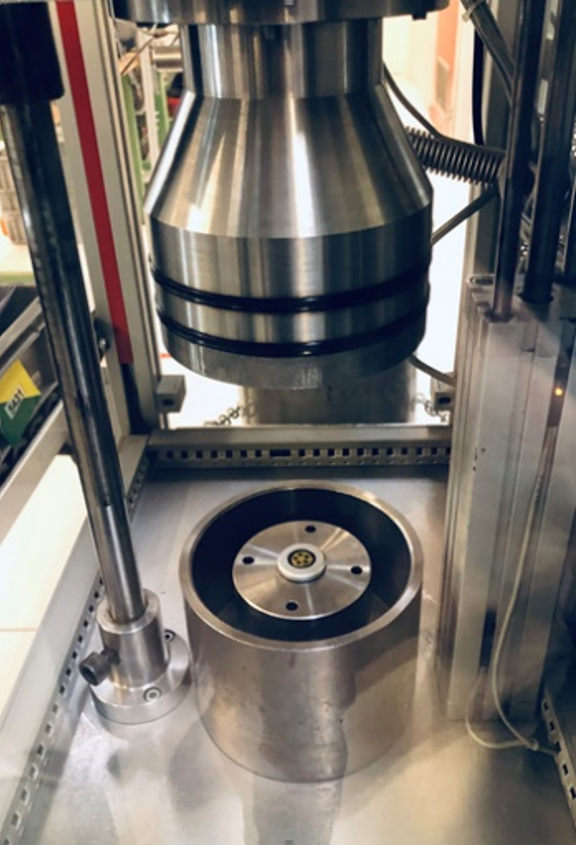
Fischer’s hermetic connectors are qualified to a leak rate below 10⁻⁸ mbar l/s, and the Fischer Core Series in stainless steel – built in 316L stainless steel, PEEK, and EPDM for the best possible radiation resistance – withstands up to 10⁷ Gy (1,000 Mrad) unsealed and up to 10⁵ Gy (10 Mrad) when sealed. As for the Fischer Core Series in brass, it is particularly suited where electromagnetic interference must be avoided or where temperatures swing to extremes.
This is the same technology base that other nuclear-sector organizations rely on, such as radiation-monitoring instrument makers that use Fischer connectors for gamma dose-rate monitoring under extreme conditions.
The ultra-rugged Fischer UltiMate Series also offers hermetic connectors in various configurations, extending this same reliability to compact, lightweight applications.
The versatility of Fischer Connectors’ offering is a fitting testament to a technology invented to solve one problem, gas-tight sealing, and proven, decades on, to solve many more.
More on hermeticity and nuclear connectivity:
- Product page: Hermetic connectors
- Product line: Fischer Core Series
- Flyer: Nuclear connectivity solutions
This may be of interest to you
Next news
Customer voice: audited and certified to the highest quality, safety and reliability industry standards
August 6, 2026 · 4 min read