

By contributing to the ITER Project, Fischer Connectors continues to build on its heritage while supporting a project that addresses one of the major challenges of our time: the development of sustainable energy solutions for the future.
Fischer Connectors contributes to the ITER Project with custom hermetic solutions
24. April 2026 · 4 LesezeitThe International Thermonuclear Experimental Reactor (ITER) Project is one of the most ambitious energy projects in the world, aiming to demonstrate the scientific and technological feasibility of fusion energy for peaceful purposes, an essential feature of which would be achieving sustained fusion power generation. The purpose of the ITER Organization, based in southern France, is to promote cooperation among the Members on the ITER Project.
In January 2026, when Swiss companies could resume participation in ITER (see news “Switzerland rejoins ITER”), Fischer Connectors, part of the Swiss-headquartered Conextivity Group, launched a project to contribute to the ITER Project by supplying hermetic connectors and cable solutions specifically designed to meet the stringent requirements of this extreme environment. This involvement comes at a time when the demand for reliable and sustainable energy solutions continues to grow worldwide, placing increasing importance on advanced technologies capable of supporting next-generation energy systems.
Aligned with the company’s core expertise and innovation capabilities
Fischer Connectors’ participation aligns naturally with its core expertise and customization capabilities.
The company has a long history of innovation in connectivity, rooted in its heritage: its founder pioneered the world’s first hermetic connector. This legacy continues to shape the company’s focus on high-performance sealing technologies, particularly suited for demanding applications such as nuclear and energy environments.
Hermetic connectors are typically used for pressurized vessels, test & measurement tools such as mass spectrometers and electron microscopes, and vacuum applications such as vacuum pumps and chambers for monitoring and safety devices in nuclear research.
This is well illustrated by the company’s long-standing relationship with CERN, the European Organisation for Nuclear Research based in Geneva, Switzerland, where tens of thousands of Fischer hermetic connectors have been performing flawlessly for decades in measurement instruments, cryostats, vacuum pumps and chambers, and monitoring and safety devices.
The connectivity project with the ITER Organization also reflects Fischer Connectors’ renowned capability to design and deliver customized solutions for complex applications. Fischer Connectors has strengthened its teams by hiring specialists dedicated to the development of tailored solutions for the project, including feedthrough connectors. Such connectors enable electrical signals and power to safely pass through sealed barriers without compromising containment. They are engineered to withstand extreme conditions – such as radiation, high pressure, and temperature – while maintaining leak-tight integrity and long-term reliability.
The connectivity project is being carried out by Conextivity Group’s R&D center in Switzerland and the team of its French subsidiary, Fischer Connectors France (based near Paris), in close collaboration with technology and materials specialists across Europe, reflecting the internationally coordinated effort underpinning ITER’s forward-looking program.
(The opinions expressed in this news article are those of Fischer Connectors only and do not represent the ITER Organization’s official position.)
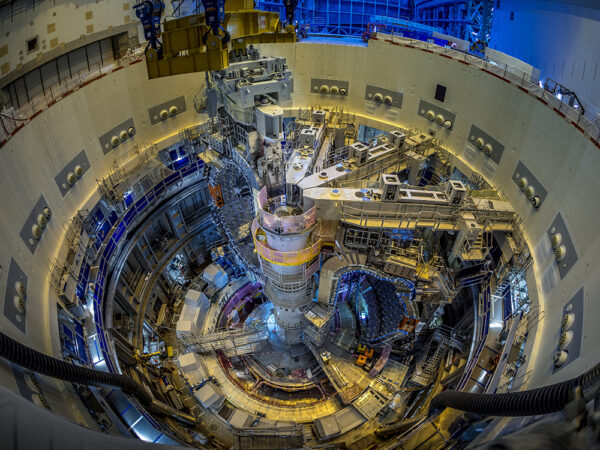
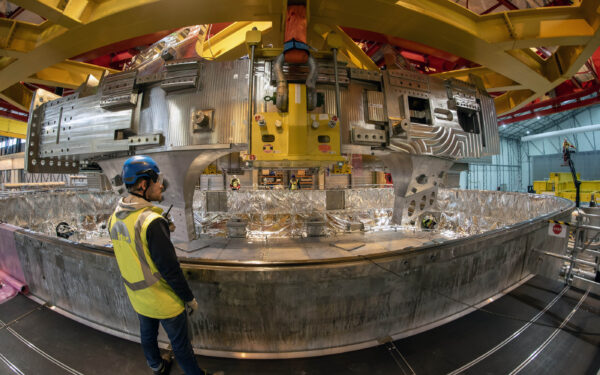
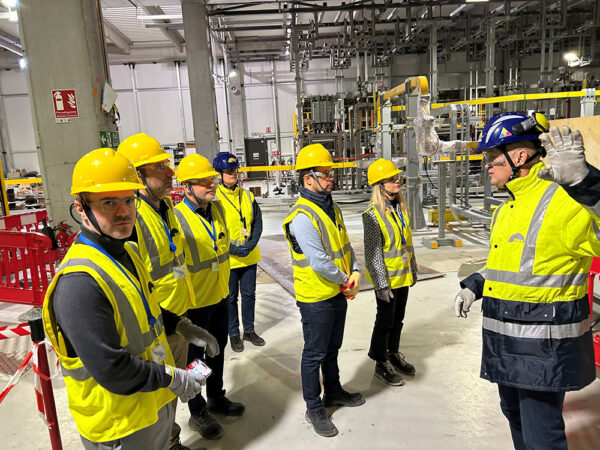
“ITER represents a convergence of advanced research, industrial expertise, and long-term vision – and this environment is well aligned with Fischer Connectors’ strengths in engineering, research and development, and innovation. ITER is a natural extension of our expertise in hermetic connectivity and our long-standing engagement in demanding scientific and energy applications. It brings together the kind of technical challenges, collaborative environment, and long-term perspective that match our approach to innovation and solution development.”
— Jonathan Brossard, CEO of the technology group Conextivity to which Fischer Connectors belongs, and Romain Lacroix, General Manager of Fischer Connectors France
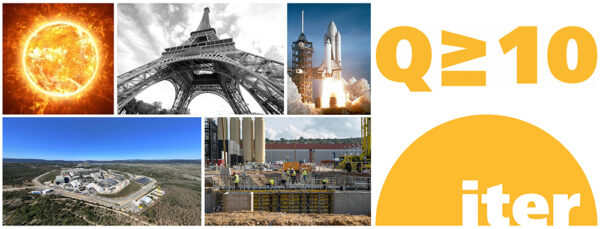
ITER in a few figures
150 million degrees Celsius – Temperatures inside the ITER tokamak, or ten times hotter than the core of the Sun.
23,000 tons – Weight of the ITER tokamak, about three times that of the metal structure of the Eiffel Tower.
2x the thrust of a space shuttle at liftoff (60 meganewtons, or 6,000 tons of force) – The force that the ITER central solenoid structure – the large 1,000-ton electromagnet at the center of the machine – must be strong enough to contain.
500 MW – The amount of fusion power ITER is expected to produce for periods of 400 to 600 seconds from an injected heating power of 50 MW, corresponding to an energy gain factor of 10 (Q ≥ 10); current fusion power record, held by the European tokamak JET (now decommissioned): 16 MW produced from 24 MW input (Q = 0.67).
60 soccer fields or 42 hectares (about 104 acres) – The surface area of the ITER platform at the site located in Saint-Paul-lès-Durance, in the Bouches-du-Rhône.
Nearly 5,000 people currently work in the offices and on the ITER worksite.
(Figures and photos: ITER website, Facts & Figures)
More on ITER and Swiss participation:
- Switzerland’s State Secretariat for Education, Research and Innovation SERI: ITER / Fusion for Energy
- ITER newsline, November 25, 2025: Switzerland rejoins ITER
Nächste News
Kundenfeedback: Wie KEYSTONE Daten- und Strom-Hubs die Edge-Konnektivität für NGC2 vereinfachen – das Anwendungsbeispiel Drohnenoperationen
16. Juli 2026 · Lesezeit 4 min